The Internet seems huge. And indeed it is. But there is a detail that is often overlooked: what we use every day is only a small fraction of the entire network.
When you search for something on Google, read the news, open YouTube, or visit a site, you are moving in the most visible part of the web. Beneath that surface, however, lies a much larger mass of non-indexed content, protected areas, private archives, and, in an even smaller and more specific portion, environments built on purpose for anonymity.
To really understand the difference between the Surface Web, Deep Web, and Dark Web, the iceberg metaphor remains the most effective.
Table of contents
- 🌐 Internet as a digital ocean
- 🔎 Surface Web, the tip of the iceberg
- 📂 Deep Web, the hidden but normal part
- 🛡️ Why the Deep Web really exists
- 🌑 Dark Web, a small subset of the Deep Web
- 🧅 How to access the Dark Web
- ⚠️ Dark Web between privacy protection and illegal activities
- 🏙️ The city metaphor that clarifies everything
- 🧠 What is really worth remembering
- ❓ FAQ
🌐 Internet as a digital ocean
The web can be imagined as an immense, ever-growing digital territory, of which we do not know every corner in detail. From a technical point of view, everything is based on a continuous exchange of messages between a client, such as your computer or smartphone, and a remote server.
These messages are broken into data packets and travel following precise rules, called protocols, such as HTTP. Behind a simple click, therefore, there is an organized machine communicating rigorously.
But from a practical standpoint, the real question is another: how much of the Internet is actually visible?
The answer is surprising. Only a tiny part.
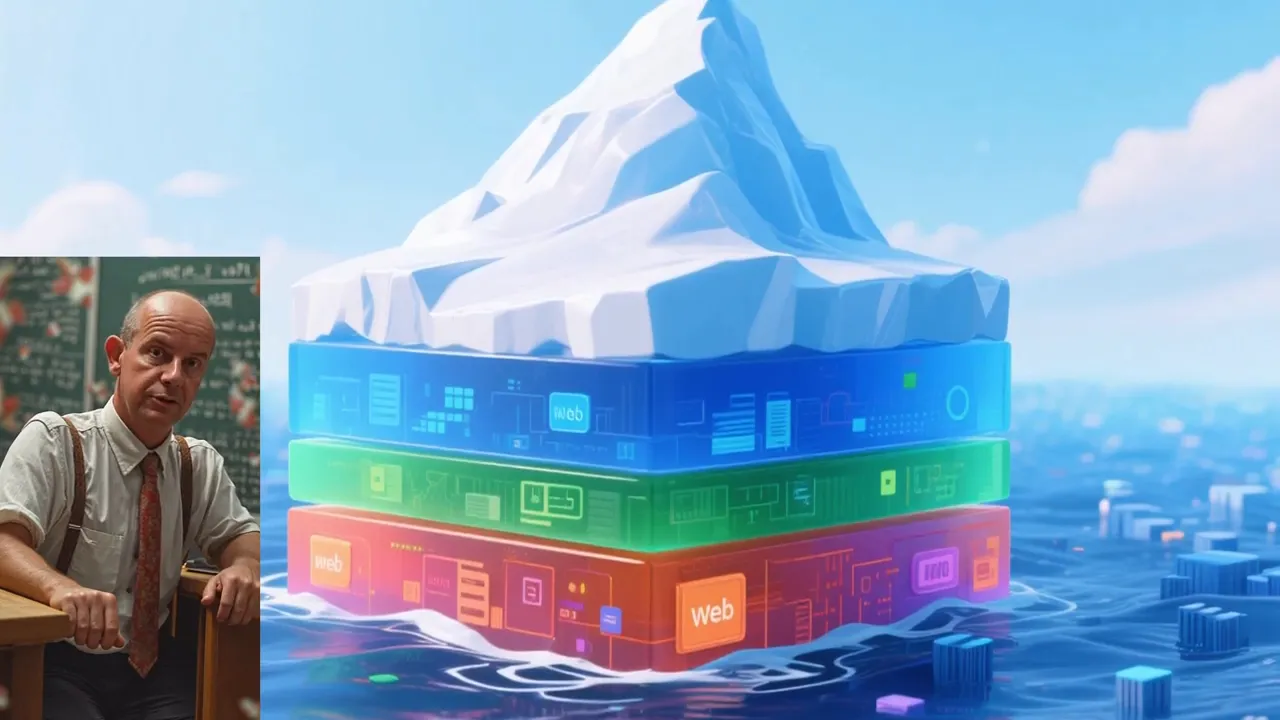
🔎 Surface Web, the tip of the iceberg
The Surface Web, or surface web, is the visible part. It is what search engines manage to find, read, and index in their databases.
This is where crawlers come into play, i.e., automated software that scans the net much like a very fast librarian would. They visit pages, record their existence, and make them searchable in search results.
In practice, the Surface Web is everything you can easily find with a normal search. Some examples:
- news sites
- public blogs
- online encyclopedias
- open forums
- videos and pages accessible without login
It is the web we use every day and requires no special configurations. Just a common browser, like Chrome or Firefox, and an Internet connection.
The interesting thing is that, although it seems boundless, the Surface Web represents only a small slice of the entire digital ecosystem. The most frequently cited estimates place it around 4 or 5% of the total.

📂 Deep Web, the hidden but normal part
And here we are at the largest part of the iceberg: the Deep Web.
Here the first major confusion often arises. Many associate the word 'deep' with something shady or illegal. In reality, in most cases, the Deep Web is simply composed of content not visible to search engines.
They do not appear on Google not because they are dangerous, but because they are protected or intentionally excluded from indexing. This can happen for several reasons:
- restricted access via username and password
- pages behind login
- internal databases
- security measures that block crawlers
Inside the Deep Web you find a huge amount of perfectly legitimate content. In fact, you probably log into it every day without thinking.
Some examples of the Deep Web are:
- your email inbox
- online banking
- digital medical records
- academic databases
- internal catalogs of companies and institutions
- platform content available only to subscribers
This part of the network requires no special tools. It can be reached with normal browsers, as long as you know the correct address and have the right credentials.
And this is where the largest slice of the Internet lies, about 90 to 95%.

🛡️ Why the Deep Web really exists
The Deep Web is not an anomaly. It is a necessity.
If everything were public and indexed, digital privacy would not exist. Your emails would appear in search results. Your banking details would be exposed. Health records, corporate files, paid content, and confidential archives would be freely accessible. It would be a disaster.
So the submerged part of the web should not be demonized. It is, on the contrary, the mechanism that allows the Internet to be useful for private, professional, and sensitive activities as well.
A simple way to understand it is this: the Surface Web is public, the Deep Web is confidential. Not hidden in a criminal sense, but simply not open to everyone.

🌑 Dark Web, a small subset of the Deep Web
The Dark Web is yet another thing.
It is located inside the Deep Web, but does not coincide with it. It is a much smaller portion, designed specifically to guarantee a high level of anonymity both for those who publish content and those who access it.
This is the crucial difference to remember:
- Deep Web: non-indexed content, mostly normal and legitimate
- Dark Web: network accessible with specific tools and built to protect identity
So no, not all of the Deep Web is the Dark Web. And no, not everything that is hidden is illegal.
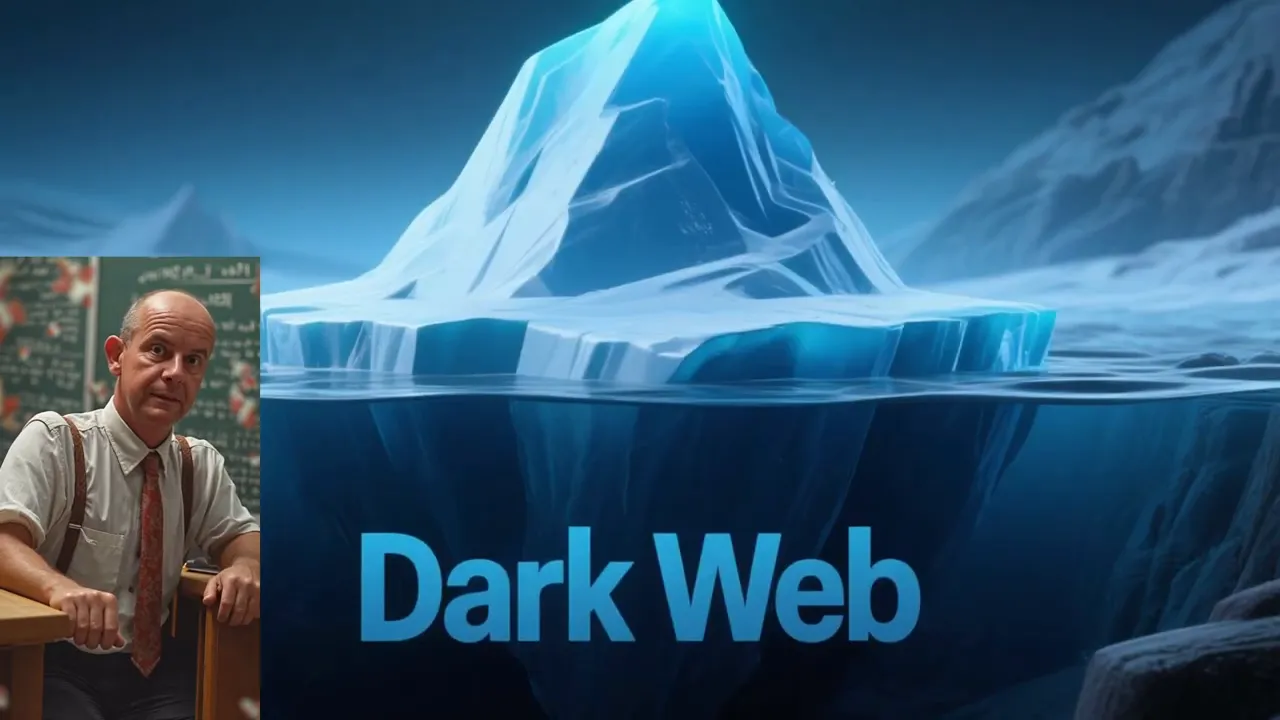
🧅 How to access the Dark Web
The Dark Web is not designed to be reached with common browsers. To access it, you need specific tools, such as Tor, which stands for The Onion Router.
The underlying principle is the so-called onion routing. In practice, data is protected by multiple encryption layers and passed through different nodes distributed worldwide. Each hop only knows part of the path, not the entire journey.
This system makes it much more difficult to trace precisely who sends a message, where they are located, and who it is intended for.
It is precisely this architecture that makes the Dark Web so peculiar. It is not just about non-indexed sites, but a network designed to mask the origin and destination of traffic.

⚠️ Dark Web between privacy protection and illegal activities
The Dark Web is not automatically synonymous with crime. In some contexts, it can have legitimate and even important uses. Journalists, activists, and people living under repressive regimes can exploit it to communicate, publish information, or seek protection from censorship and surveillance.
That being said, it would be equally wrong to ignore its risks.
The same structure that protects anonymity can attract illegal activities. In these areas, black markets, trades of stolen data, and other illegal operations involving substances, weapons, or compromised credentials can proliferate.
For this reason, the Dark Web is often depicted as a dark place. Its reputation doesn't come out of nowhere, but must be framed correctly: not everything found there is illegal, but the risk is real.

🏙️ The city metaphor that clarifies everything
If the iceberg helps to understand the dimensions, the city metaphor helps to understand the functions.
- Surface Web: these are the public streets, open shops, parks, and squares. Anyone can enter.
- Deep Web: these are the private homes, offices, and banks. They exist, they are legitimate, but you only access them with keys, permissions, or credentials.
- Dark Web: it is like a hidden passage leading to a secret basement, frequented both by those seeking maximum confidentiality and those carrying out illegal activities.
This distinction is essential because it avoids one of the most common mistakes: putting everything in the same pot.

🧠 What is really worth remembering
When talking about the Internet, the point is not to be afraid of what lies below the surface. The point is to understand how the network is built.
The key ideas are these:
- Internet does not coincide with what appears in search engines.
- The Surface Web is only a small part of the total.
- The Deep Web contains mostly private, protected, and perfectly legitimate content.
- The Dark Web is a small section of the Deep Web, designed for anonymity.
- Anonymity can serve to protect freedom, but can also favor abuses.
In other words, knowledge remains the best defense. The more you understand the structure of the digital world, the less you risk being fooled by myths, useless fears, or gross simplifications.
❓ FAQ
Is the Deep Web illegal?
No. The Deep Web mainly includes private content or content protected by restricted access, such as email, online accounts, health records, and academic databases.
What is the difference between the Deep Web and the Dark Web?
The Deep Web is the set of contents not indexed by search engines. The Dark Web is a small part of the Deep Web that requires specific software and is designed for anonymity.
Can you access the Deep Web with a normal browser?
Yes. In most cases, it is sufficient to use a common browser and have the correct address or login credentials.
Do you need Tor to enter the Dark Web?
Generally yes. The Dark Web is not accessible with traditional browsers and requires specific tools such as Tor.
Is the Dark Web used only for criminal activities?
No. It can also be used by journalists and activists who need anonymity and protection from censorship. However, it also hosts illegal activities, so the risks should not be underestimated.